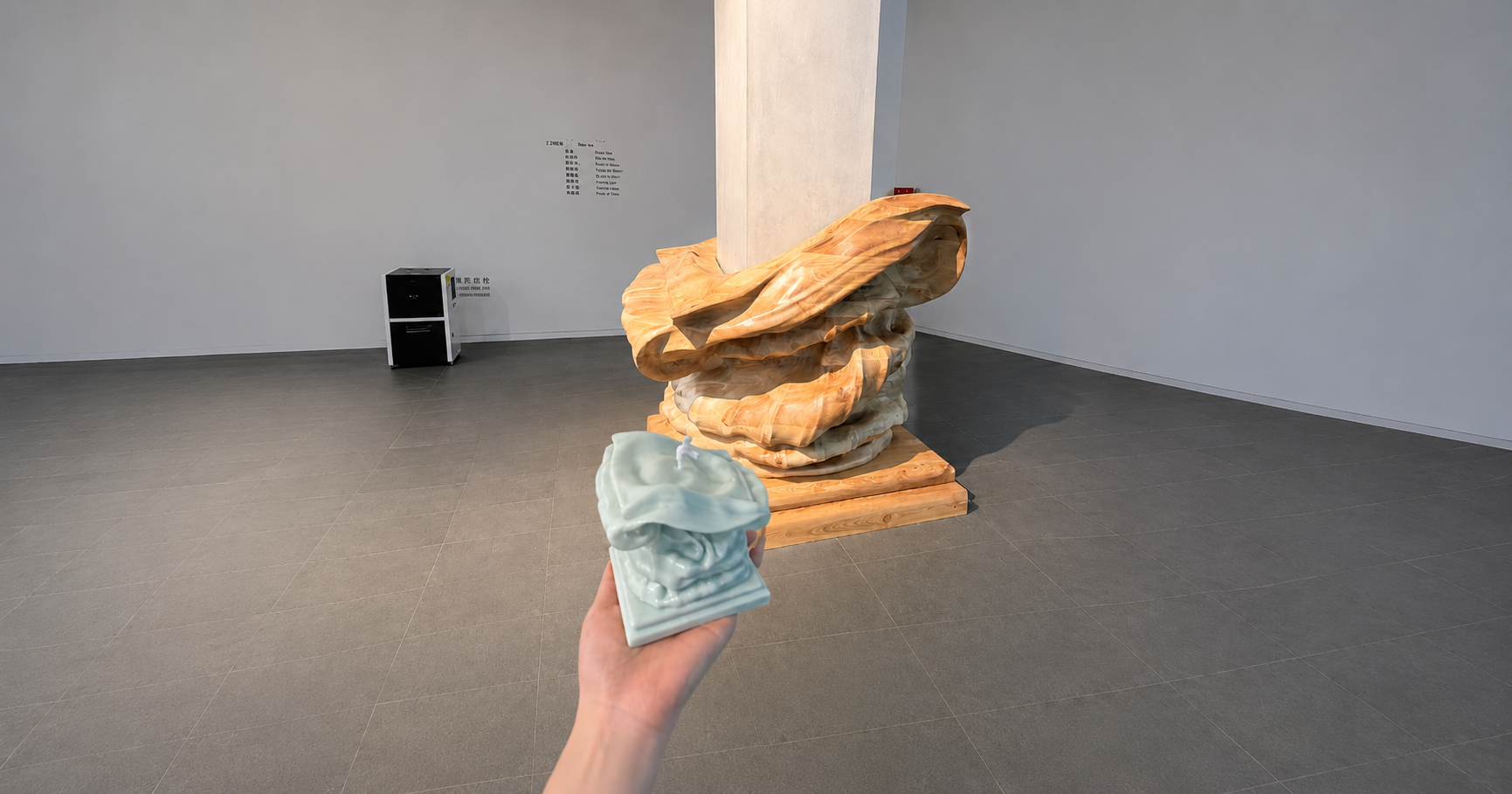

Most gallery masterpieces stay trapped on a museum floor. They generate zero revenue after closing night. That ends when engineering meets art.
Fine art can be translated into a scent capsule. The process requires precision mold engineering, molecular wax control, and a manufacturing partner who treats the original artwork as a non-negotiable reference point, not a starting suggestion.
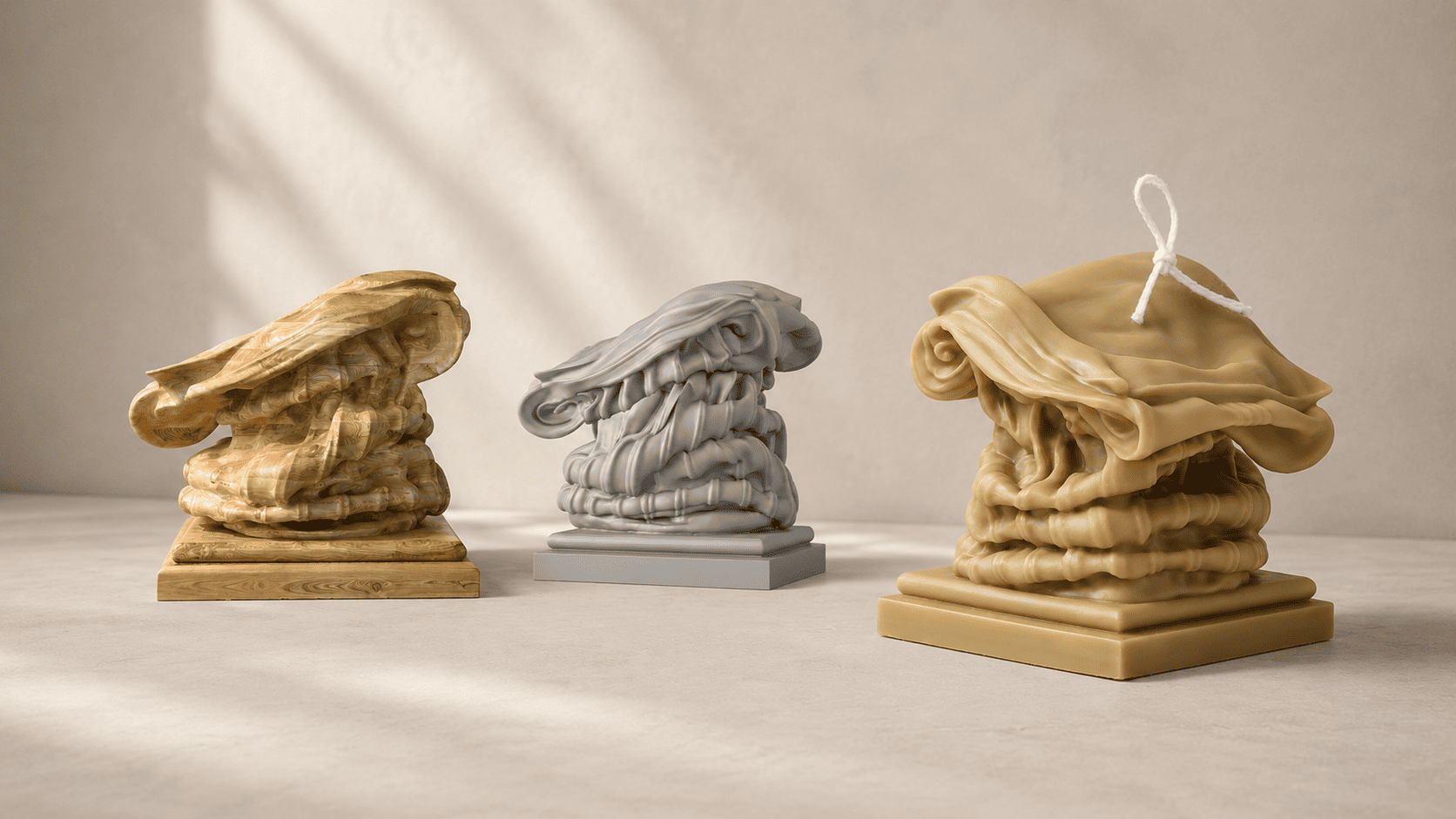
A singular installation is a cost center. A replicated scent capsule is a revenue stream1. The gap between the two is not creativity. It is manufacturing capability. This case study shows exactly how we bridged that gap for one curator who refused to accept "simplify your design" as a final answer.
The Fine Line Between Transformation and Copying?
Most brands treat their own exhibition pieces like untouchable originals. They assume replication means compromise. That assumption costs them years of lost revenue.
Transformation is not copying. It means capturing the visual language of a monumental sculpture—its exact surface lines, its shadow depth, its material memory—and encoding all of that into a premium, shippable scent object at reduced scale.
Why Traditional Factories Cannot Do This
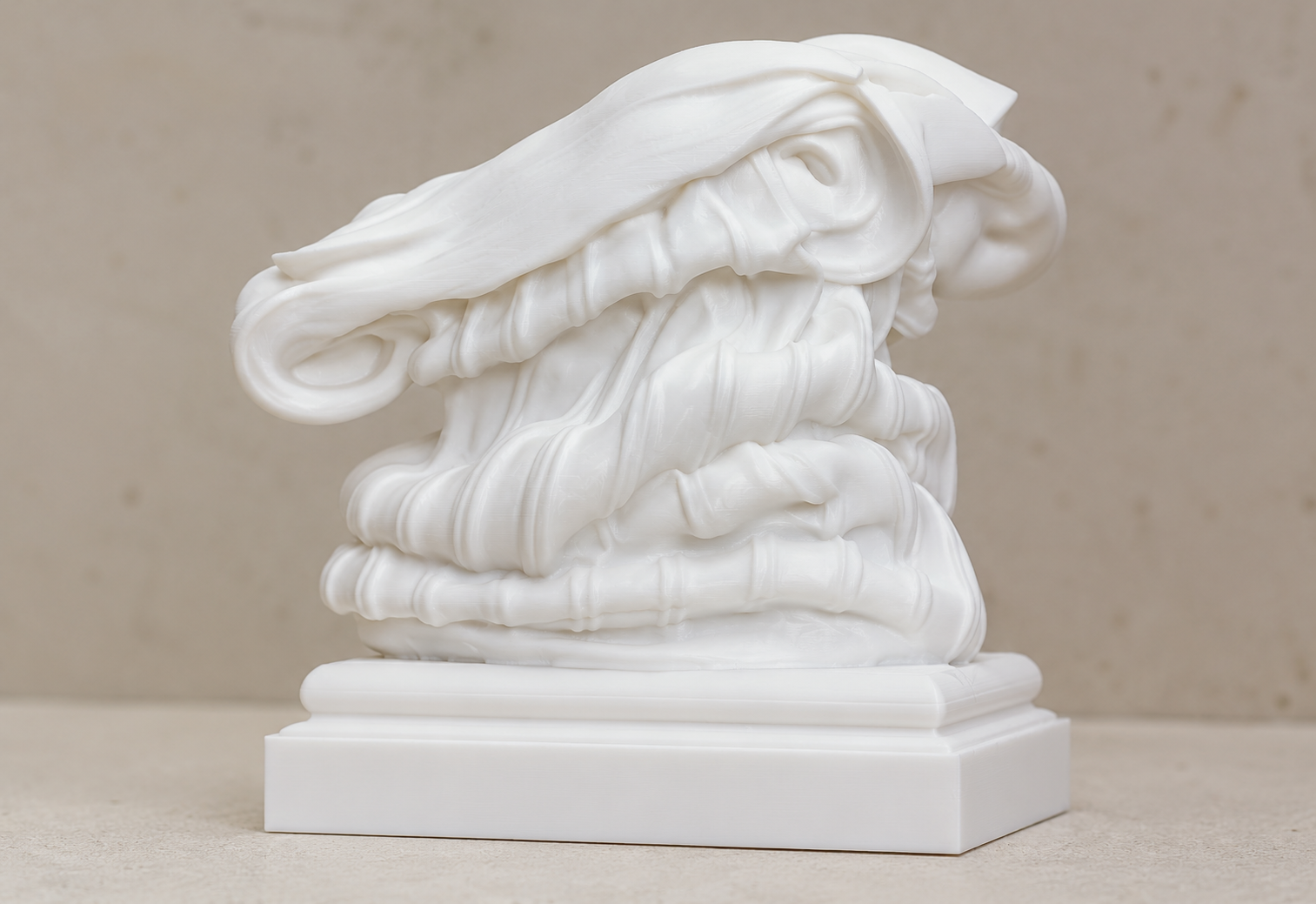
Standard factories are optimized for volume and speed. They are not built for art. When a curator first brought this wooden sculpture project to a traditional mass-manufacturing facility, the factory treated it like a standard jar candle. The complex overlapping drapes of the original carving were ignored. The fluid dynamics of liquid wax moving through that geometry were never analyzed.
The prototypes came back cracked, full of internal air pockets, and covered in frosting. The factory's solution was to simplify the design. That is the factory default: reduce the problem by reducing the art.
We refused that path. Our starting point was the opposite. Understand the geometry first, then engineer the process around it.
| Issue Identified | Factory Default Response | ZLCandle Engineering Response |
|---|---|---|
| Internal air pockets | Simplify geometry | 3D model analysis + strategic air vent pathways |
| Visible seam lines | Blade-cut demolding | Multi-piece seamless mold structure |
| Surface frosting and cracks | Swap to a cheaper wax formula | Hyper-purified wax + controlled thermal lifecycle |
Each failure point at the traditional factory became a dedicated engineering problem for our lab. The goal was not to produce something similar to the original. The goal was to produce something indistinguishable from it at micro-scale. Every crack, every bubble, every seam line was a specific process failure with a specific process fix. That is the difference between a production facility and a material engineering lab.
How Did We Eliminate the Three Fatal Bottlenecks?
Air pockets. Seam lines. Frosting. These three problems destroyed the first round of prototypes. Each one had a precise engineering cause and a precise engineering solution.
All three problems share one root. Standard mold logic and standard wax processing were never designed for asymmetric, sculptural geometries. Fix the process, and the problems disappear.
Optimization 1: Air Pocket Elimination via 3D Geometry Analysis
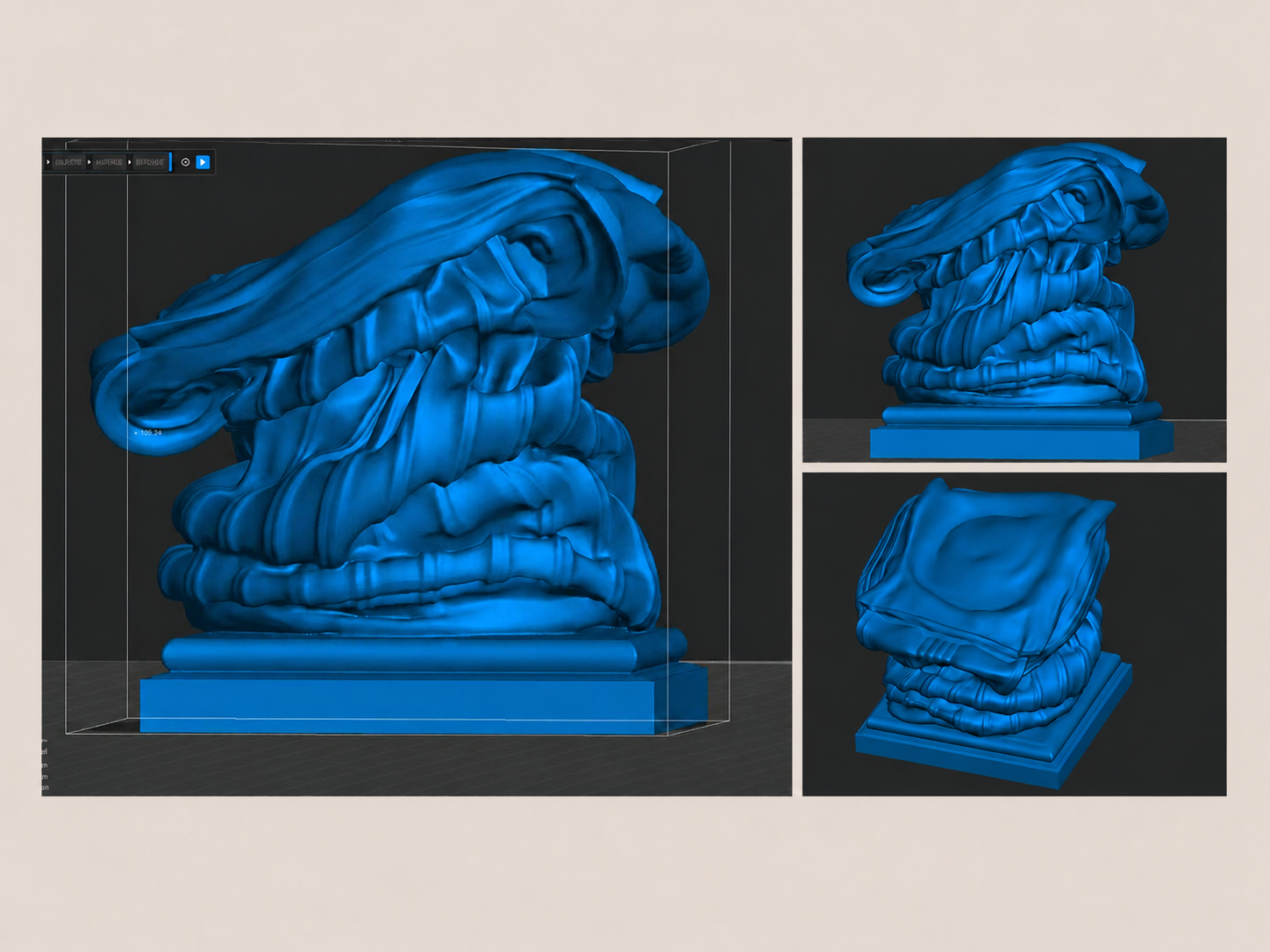
The overlapping drapery of the original carving creates geometric dead zones. When liquid wax fills a standard mold, air locks itself into those zones permanently. Standard factories have no protocol for this. They pour and hope.
Before we cut a single physical mold, our product team ran a full digital geometry analysis. We mapped every blind spot in the structure. We then engineered microscopic air vent pathways directly into the inner mold matrix. We also applied a degassing pre-treatment to the liquid wax before every pour.
Surface bubble defects dropped to zero.
Optimization 2: Seamless Demolding Without a Single Blade Cut
Standard factory practice for undercut-heavy sculptures is blade demolding. A technician slashes open the silicone mold to pull the candle out. Every cut leaves a visible seam line. On a luxury product, that seam line is a defect you cannot explain away in a product photo.
We developed a multi-piece seamless mold structure in-house. Each mold segment was designed to separate cleanly along the sculpture's natural geometry. We paired this structure with industrial-grade, ultra-high elongation art silicone. This material stretches far beyond the limits of standard silicone before releasing the candle intact. No cuts. No seams. No compromises to the surface detail.
Optimization 3: Molecular Crystallization Control to Prevent Frosting
Natural vegetable wax crystallizes as it cools. When different sections of a candle cool at different speeds—because the geometry has varying wall thickness—the crystals form unevenly. That unevenness appears on the surface as white frosting and stress fractures.
This sculpture had extreme thickness variation across the same pour. Left to cool at ambient room temperature, every prototype frosted.
| Variable | Standard Process | Our Process |
|---|---|---|
| Wax purity level | Standard botanical blend | Hyper-purified botanical base wax |
| Cooling method | Ambient room temperature | Controlled thermal lifecycle protocol |
| Crystal uniformity | Uneven, visible surface frosting | Uniform crystallization across entire form |
| Structural result | Stress cracks present in every batch | Zero cracks across all final prototypes |
We controlled the entire thermal cooling lifecycle from pour temperature to final set. Every millimeter of the candle crystallized at the same rate. Frosting was eliminated without changing the scent profile or burn performance. The fix was entirely in the thermal engineering, not in a formula shortcut.
What Does This Case Study Mean for Your Brand?
You may have a design that a factory already told you was impossible. That usually means the factory lacks the engineering process, not that your design is wrong.
There are three brand-level lessons from this project. Each one applies directly to any premium brand considering a sculptural candle or complex vessel for an upcoming launch.
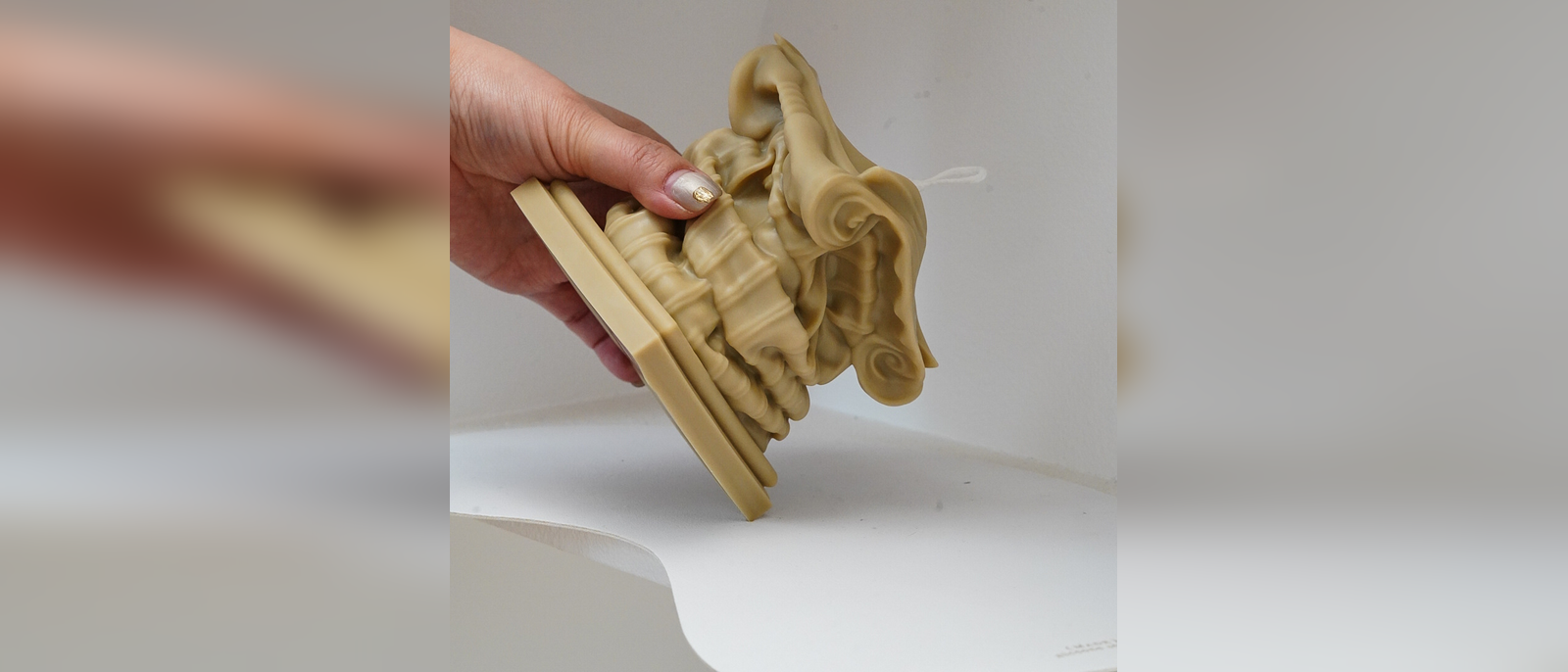
Lesson 1: The Object Is a VIP Memory, Not Just Merchandise
This candle was sold directly at the live exhibition. High-net-worth attendees did not buy a candle. They bought a portable fragment of an experience they had just lived. The object went home with them and remained in their private space, carrying the artist's visual language in a form a gallery ticket never could.
That is what premium manufacturing unlocks. A precision scent object placed into the hands of the right audience does more long-term brand work than any paid media. It is a physical memory. It holds a room, a moment, and a design language inside a single flame.
Lesson 2: One Original Can Fund Ongoing Global Revenue
A monumental sculpture sells once. A precision micro-replication workflow turns that same artwork into a product that ships globally, on repeat. After the exhibition closed, the candle remained available through online retail. The artist's visual language continued reaching audiences who never attended the show and never would have.
| Revenue Model | Original Sculpture | Engineered Scent Capsule |
|---|---|---|
| Sales event type | One-time only | Ongoing, repeatable |
| Geographic reach | Physical exhibition space | Global online retail |
| Audience size ceiling | Exhibition attendees only | No ceiling |
| Revenue lifespan | One season | Long-tail product line |
The engineering investment in the mold and formula pays for itself across every unit shipped. That is what we mean by omnichannel monetization through material precision. The art does not stop working when the gallery doors close.
Lesson 3: The Right Partner Does Not Ask You to Compromise
My role at ZLCandle is to act as a technical translator. I take a design brief—a Figma file, a 3D render, a physical sculpture—and find the manufacturing path that delivers it intact. Not a simplified version of it. Not a factory-friendly approximation of it.
The machinery adapts to the design. That is the atelier philosophy. We do not reverse-engineer the art to fit the process. We build the process around the art, one microscopic decision at a time.
If a factory has already told you to simplify your design, that conversation is worth having again—with a different kind of partner.
If your brand is currently developing a complex sculptural vessel, or struggling with natural wax stability for an upcoming collection, you do not have to simplify your vision. Let us handle the manufacturing physics.
Conclusion
Fine art belongs beyond the gallery wall. With the right engineering process, a single sculpture becomes a global product that carries your brand's language indefinitely.
<!--[googlesitekit-end-of-content]-->
"New Report Released on the Economic Impact of the Arts and ...", https://www.arts.gov/news/press-releases/2021/new-report-released-economic-impact-arts-and-cultural-sector. This source provides data on revenue generation through product replication in the arts, supporting the claim that replicated scent capsules can create ongoing revenue. Evidence role: statistic; source type: government. Supports: A replicated scent capsule is a revenue stream.. Scope note: The data may not directly relate to scent capsules but offers insights into revenue models in art-related products. ↩