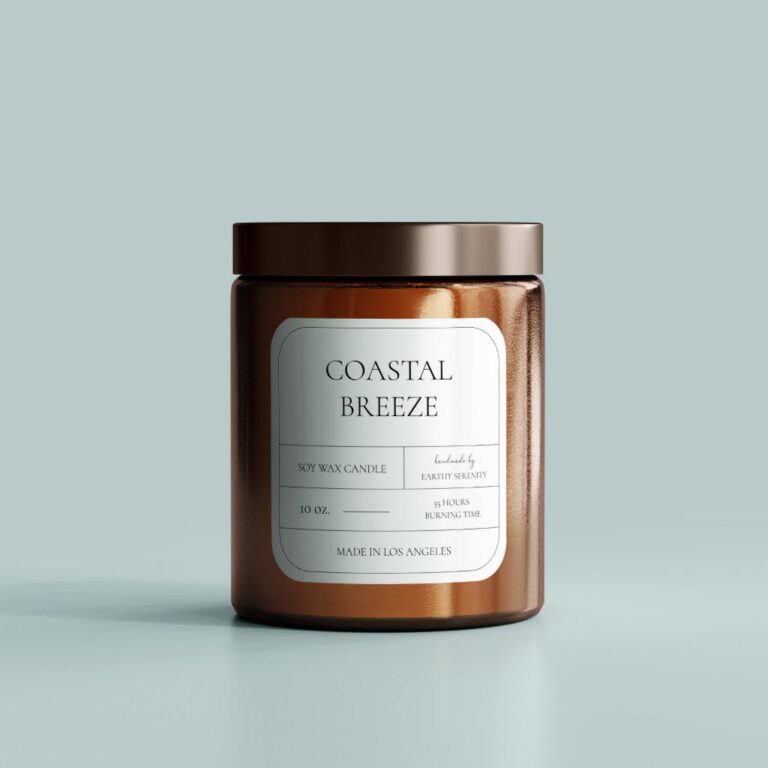
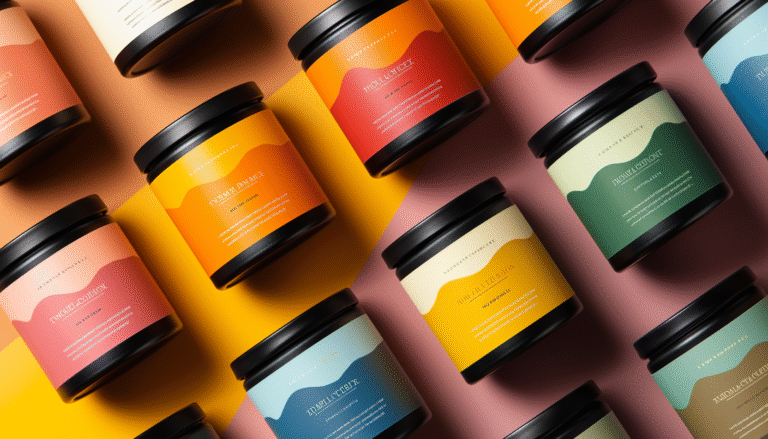
The candle market is flooded with generic products. Brands that stand out win. But most manufacturers can't deliver the custom quality your brand actually needs.
High-end custom candles are made through a structured process: concept design1, 3D modeling2, custom mold creation3, fragrance selection4, precision pouring5, and quality control6. The total cost depends on mold complexity, order volume, and fragrance tier. Margins typically range from 40% to 70% for branded products.
Most brands I talk to already know they want something unique. They just don't know where to start, or what it will actually cost them. I've worked with brands from over 30 countries, and the questions are almost always the same. So let me walk you through the whole picture — process, costs, and what you can actually earn.
How Are High-End Custom Candles Made?
Most people assume candle-making is simple. Pour wax into a jar, add a wick, done. But that thinking is exactly why so many products look and feel cheap.
High-end custom candles require precision at every step. The process includes design consultation, 3D modeling2, silicone mold production7, wax selection, fragrance blending, controlled pouring, and multi-stage quality inspection. Each step directly affects the final product's appearance, scent throw8, and burn performance9.
One of the projects I'm most proud of came from an art school — the Guangzhou Academy of Fine Arts. They had an exhibit piece they wanted to replicate as a physical retail product. That meant reverse-engineering the original artwork, building a 3D model from scratch, printing it, and then producing a high-fidelity silicone mold10. We handled every single step in-house. The final product launched online and has been selling consistently ever since. The client made a strong return on investment11, and the product is still live today.
That project taught me something important: the real value of custom candle manufacturing isn't just production. It's the ability to take a creative idea — even a 2D image or a piece of art — and turn it into something physical and sellable.
Here's how the full process breaks down:
Step-by-Step: From Concept to Finished Candle
| Stage | What Happens | Typical Timeframe |
|---|---|---|
| Concept & Consultation | Brand brief, trend review, material suggestions | Day 1–2 |
| 3D Modeling | 2D image or sketch converted to 3D digital file | Day 2–4 |
| 3D Printing & Mold Making | Physical model printed, silicone mold cast | Day 4–7 |
| Fragrance & Wax Selection | Scent matched to brand identity and budget | Day 3–5 (parallel) |
| Prototype Production | First physical sample created | Day 7–10 |
| Client Approval & Revisions | Sample reviewed, adjustments made if needed | Day 10–14 |
| Mass Production | Full run with automated pouring lines and QC | 15–25 days |
| Packaging & Shipping | Export-safe packaging, global logistics | Included in lead time |
The mold creation phase is where most manufacturers fail. Common problems include air bubbles trapped in wax12, visible seam lines13 on molded shapes, and color inconsistency in plaster vessels14. We've developed proprietary techniques over 10+ years specifically to eliminate these issues. A flawless finish isn't optional — it's what separates a premium product from a forgettable one.
How Do I Choose a Custom Candle Supplier?
I hear this question constantly. And I understand why. There are hundreds of candle factories online, and almost all of them claim to offer "custom" products.
When choosing a custom candle supplier, look for: in-house mold-making capability, fragrance sourcing transparency15, a low prototype MOQ, verifiable certifications (MSDS, CE, REACH, BSCI), and a documented quality control6 process. Repeat order rates above 80%16 are a strong signal of consistent quality.
Most "custom" suppliers simply let you choose from a fixed catalog of molds and add your label. That's not real customization. Real customization means the product was designed around your vision, not picked from a shelf.
Here's how I recommend evaluating any supplier before you commit:
Supplier Evaluation Checklist
| Evaluation Criteria | Why It Matters | Red Flag |
|---|---|---|
| In-house 3D modeling2 & mold making | Controls quality and lead time | Outsourced mold work = longer delays, less precision |
| Prototype MOQ17 | Lets you test before large investment | MOQ above 50 units for sampling is too risky |
| Fragrance sourcing | Affects scent quality and safety compliance | Unnamed or unverified fragrance sources |
| Certifications | Required for EU, US, and Amazon markets | No MSDS, REACH, or CE documentation |
| Repeat order rate | Proves real client satisfaction | No data provided or below 70% |
| Factory size & equipment | Determines capacity and consistency | No factory visit option or photos |
| Communication speed | Reflects operational professionalism | Slow replies or vague answers on technical questions |
At our facility in Shandong, China, we operate an 8,000 m² smart factory with automated pouring lines and 27 dedicated combustion and scent diffusion testing chambers. Every batch is tested before it ships. Our repeat order rate sits above 85%, and we serve clients in over 30 countries. Those numbers aren't marketing — they're what happens when you prioritize quality over volume.
Can I Make Custom Shaped Candles for My Brand?
This is where things get exciting. Most brands don't realize what's actually possible.
Yes, you can create fully custom-shaped candles18 in virtually any form. With 3D modeling2 and silicone mold production7, your brand can produce candles shaped like sculptures, logos, botanical forms, or original artworks. Prototype MOQ17 starts at just one unit, making it accessible for brands at any stage.
The art school project I mentioned earlier is a perfect example of this. The original exhibit piece was never designed to be a candle. But through 3D modeling2 and precise mold work, we turned it into a retail-ready product. The shape was exact. The finish was clean. And the product told a story that no catalog item ever could.
This capability matters most for three types of clients:
Who Benefits Most from Custom-Shaped Candles?
| Client Type | Use Case | Business Outcome |
|---|---|---|
| Lifestyle & Home Décor Brands | Signature shapes that match brand aesthetic | Stronger brand identity, higher perceived value |
| Artists & Designers | Reproducing original artwork as a product | New revenue stream from existing creative work |
| Luxury Hotels & Spas | Bespoke shapes for in-room amenities or retail | Premium guest experience, gift shop revenue |
| E-commerce & DTC Brands | Unique products that stand out in crowded markets | Higher conversion rates, lower price competition |
| Corporate Gifting | Custom logo or themed shapes for campaigns | Memorable branded experience |
The minimum order for a custom mold at our facility is one unit. That single prototype lets you validate your design before committing to a production run. It removes the biggest barrier most brands face: the fear of investing in something they haven't seen yet.
Are Custom Candles Profitable for Businesses?
Let me be direct. Yes, custom candles can be very profitable. But only if the product is positioned correctly and the manufacturing cost is managed.
Custom candles are profitable when they are positioned as premium or branded products. Gross margins typically range from 40% to 70%19. Higher margins come from unique design, strong branding, and a supplier relationship that controls quality without inflating unit costs.
The art school project is again a useful case here. The upfront investment included mold creation and a small initial production run. But because the product had a clear story, a distinctive shape, and a defined audience, it sold consistently online. The client recovered the mold cost within the first batch. Everything after that was margin.
Profitability in custom candles comes down to a few key variables:
Factors That Drive Custom Candle Profit Margins
| Factor | Low Margin Scenario | High Margin Scenario |
|---|---|---|
| Product design | Generic jar candle with printed label | Fully custom shape tied to brand story |
| Fragrance quality | Budget fragrance, no traceability | Premium or branded fragrance house sourcing |
| Positioning | Competing on price in a commodity market | Positioned as a lifestyle or luxury product |
| Order volume | Very low MOQ, high unit cost | Scaled production with optimized unit economics |
| Packaging | Plain brown box | Bespoke packaging that supports premium pricing |
| Channel | Wholesale only at low margins | DTC or branded retail with full price control |
The brands I see making the strongest returns are not the ones trying to make the cheapest candle. They are the ones investing in a product that has no direct comparison. When a customer can't find the same item somewhere else, price becomes secondary.
What Is the Difference Between Cheap and High-End Candles?
This question sounds simple, but the answer goes deeper than most people expect.
The difference between cheap and high-end candles lies in four areas: raw material quality, manufacturing precision, fragrance performance, and finishing standards. High-end candles use premium wax blends20, traceable fragrances, defect-free surfaces, and consistent burn behavior. Cheap candles cut corners in all four areas.
I've seen both ends of this spectrum up close. When a brand comes to us after a bad experience with a cheap supplier, the complaints are always the same: bubbles in the wax, uneven surfaces, a scent that fades within an hour, and packaging that arrives damaged. Each of those problems has a root cause in the production process.
Cheap vs. High-End Candles: A Side-by-Side Breakdown
| Quality Factor | Cheap Candle | High-End Candle |
|---|---|---|
| Wax type | Paraffin only, low grade | Premium soy, coconut, or blended wax |
| Fragrance | Unverified source, weak load | Certified fragrance house, optimal fragrance load |
| Surface finish | Air bubbles, rough texture, visible seams | Smooth, consistent, defect-free surface |
| Color consistency | Batch-to-batch variation | Precise color matching with every run |
| Burn performance | Uneven burn, tunneling, short throw | Tested burn time, even melt pool, strong scent throw8 |
| Safety compliance | No MSDS or REACH documentation | Full certification: MSDS, CE, REACH, BSCI |
| Packaging | Standard plain packaging | Export-safe custom packaging |
The manufacturing gap is real. At our factory, we run 27 combustion and scent diffusion chambers specifically to test burn and scent performance on every product type. That level of testing is not standard in the industry. It's what makes the difference between a candle that performs and one that disappoints.
Do Candle Makers Offer 3D Modeling and Custom Molds?
Most don't. And that's the honest answer.
Very few candle manufacturers offer true in-house 3D modeling2 and custom mold creation3. Most rely on existing mold libraries. Suppliers that offer the full pipeline — from 3D digital modeling to 3D printing to silicone mold production7 — can take any design concept and turn it into a physical product with a prototype MOQ as low as one unit.
When the Guangzhou Academy of Fine Arts came to us, they didn't have a factory-ready file. They had an exhibit piece and a vision. We took that vision, built the 3D model ourselves, printed a physical prototype, and produced the mold. No other supplier in the conversation could do all of that in-house. That capability is rare, and it's the reason the project worked.
Here's what a full in-house design-to-mold pipeline looks like, and why it matters:
In-House vs. Outsourced Mold Making: Why It Matters
| Capability | In-House Pipeline | Outsourced Pipeline |
|---|---|---|
| Design input accepted | Sketch, photo, 2D image, idea | Usually requires a finished 3D file |
| 3D modeling2 | Done internally, fast iteration | Sent to third party, slow turnaround |
| Prototype MOQ17 | As low as 1 unit | Often 50–200 units minimum |
| Mold accuracy | Controlled by the same team doing production | Quality depends on external vendor |
| Revision speed | Same team adjusts quickly | Revision cycles add days or weeks |
| Cost control | No third-party markup | Hidden costs passed to client |
| IP protection | Design stays within one facility | Files shared across multiple parties |
The integrated process is not just faster. It's also more precise. When the team that builds the mold is the same team doing the pour, problems get caught and fixed before they become expensive. That's the practical reason our clients come back — and why our repeat order rate stays above 85%.
Conclusion
High-end custom candles are profitable, achievable, and more accessible than most brands think. The key is choosing a manufacturing partner who can handle every step — from your first sketch to the final shipped product.
Learn how strong concept design turns an idea into a premium candle that feels intentional, differentiated, and aligned with your brand. ↩
Explore how 3D modeling improves shape accuracy, speeds revisions, and helps transform sketches or artwork into sellable products. ↩
Understand how expert mold creation affects detail, surface quality, and production consistency for premium candle collections. ↩
See how the right fragrance choice strengthens brand identity, customer memory, and perceived product value. ↩
Find out how precision pouring reduces defects and delivers a cleaner finish, better burn, and more reliable product quality. ↩
A good quality control guide helps you avoid costly defects, protect your brand reputation, and ensure repeatable product performance. ↩
Discover why silicone molds are essential for capturing fine details and producing unique candle forms with consistent quality. ↩
Understanding scent throw helps you choose products that perform better and create a stronger customer experience. ↩
Learn what drives clean, even burning so you can select candles that satisfy customers and reduce complaints. ↩
This reveals how better mold fidelity preserves design detail and creates a more polished, premium-looking final product. ↩
A clear ROI resource helps you judge whether custom development costs can translate into sustainable profit. ↩
Fixing this issue leads to smoother finishes, fewer rejects, and a more luxurious appearance customers immediately notice. ↩
Learn techniques that improve finish quality and make the product look truly premium instead of mass-produced. ↩
Better color consistency protects brand presentation and ensures each production batch looks professionally made. ↩
This helps you verify safety, quality, and ingredient credibility before committing to a supplier or fragrance direction. ↩
High repeat rates signal consistent quality, dependable service, and client satisfaction you can trust. ↩
Understanding prototype minimums helps you test ideas affordably before placing larger and riskier production orders. ↩
See what is possible beyond standard catalog items and how custom forms can make your brand far more memorable. ↩
A deeper profit benchmark helps you assess pricing strategy, positioning, and whether a custom line is financially attractive. ↩
Learn how better wax blends improve burn quality, finish, and overall product appeal for premium buyers. ↩