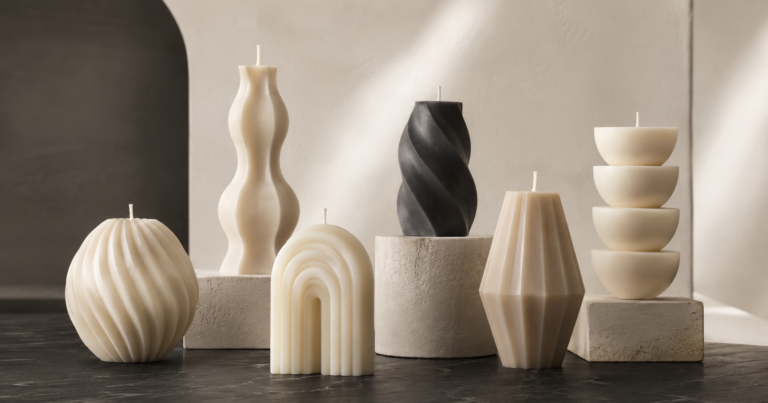

Many plant-based candles fail at the surface. Frosting appears. Oil migrates. The gloss is uneven. These problems quietly destroy the premium positioning a brand works hard to build.
In a pure plant-based wax system, a stable, premium gloss finish requires precise formulation and process control. By managing wax blend, fragrance compatibility, mold finish, and cooling conditions together, you can eliminate frosting and sweating—without relying on paraffin.
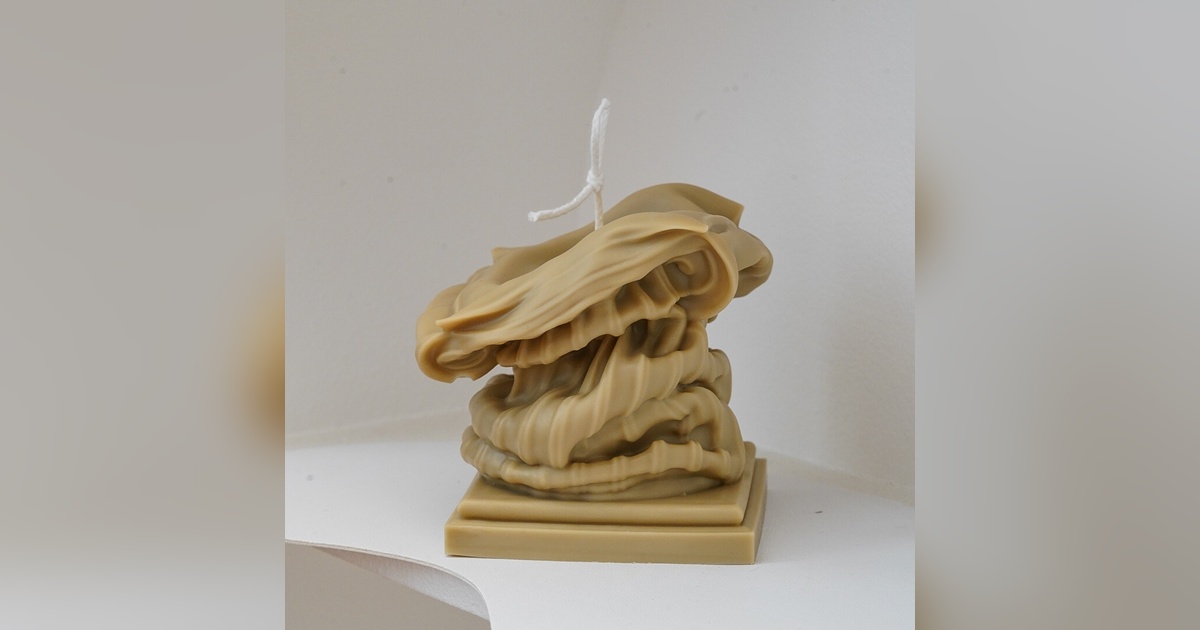
Surface finish is often treated as an afterthought in candle development. Most brands focus on fragrance and packaging first. But when a customer sees a frosted, sweating, or uneven surface, the first impression is already broken. Getting surface finish right is not luck. It is a system. And understanding how that system works starts with clearing up a very common misconception.
Is Paraffin Really the Secret Behind a Better Gloss Finish?
Many people assume that paraffin is responsible for superior gloss. They believe plant-based wax simply cannot compete. This belief pushes some brands to compromise their material story before they even test a real alternative.
Paraffin does make gloss easier to achieve. Its chemical structure produces a naturally smooth, stable surface. But this does not mean plant-based wax systems cannot reach the same standard. It means the development process needs to be more deliberate.
Why Paraffin Produces Easy Gloss
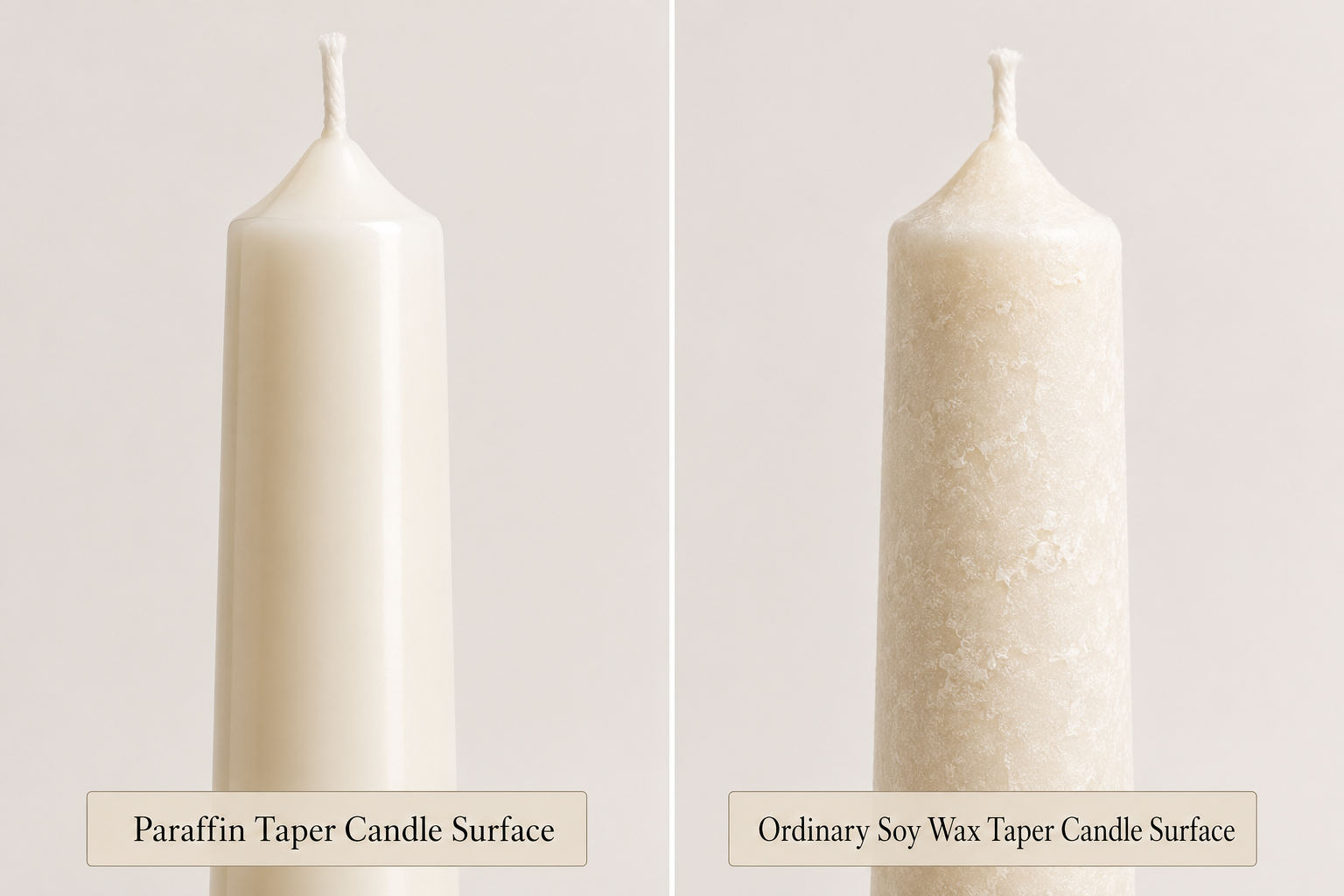
Paraffin is a fully refined petroleum-derived wax.1 Its molecular structure is tightly uniform.2 This uniformity produces a smooth, hard surface with very little variation. When paraffin cools, it contracts in a predictable way. That predictable contraction is exactly what creates a clean, consistent gloss.
Plant-based waxes behave differently. Soy wax, coconut wax, and rapeseed wax are all triglyceride-based.3 Their crystal structures are softer and less uniform than paraffin. This is what leads to surface issues when the formulation or process is not properly controlled.
| Wax Type | Surface Tendency | Gloss Potential | Key Risk |
|---|---|---|---|
| Paraffin | Hard, smooth | High with no special treatment | Not plant-based |
| Soy Wax | Soft, grainy | Moderate with process control | Frosting, sweating |
| Coconut Wax | Soft, creamy | Moderate-high with blending | Oil migration |
| Rapeseed Wax | Medium-firm | High with precise blending | Surface blooming |
What This Means for Plant-Based Development
Paraffin is not a lever I use. For brands with a clear plant-based positioning, adding paraffin—even in a small amount—creates a contradiction in the product story. The approach I take is to engineer around the natural limitations of plant-based wax, rather than patch them with a petroleum-derived material. The goal is to achieve both things at once: a genuine plant-based formulation and a surface finish that meets premium visual standards.
What Makes Gloss So Difficult to Achieve in Plant-Based Wax?
I have spent years working directly with plant-based wax systems. The gloss problem is real. It is not just a marketing concern. It is a material science problem with specific, identifiable causes.
Plant-based waxes behave differently from paraffin at every stage of production. They cool at different rates. They respond differently to fragrance loads. These differences make surface control genuinely difficult without a structured process.
The Root Causes of Surface Failure
There are three main surface problems in plant-based wax systems. Each has a specific cause. And each requires a specific response.
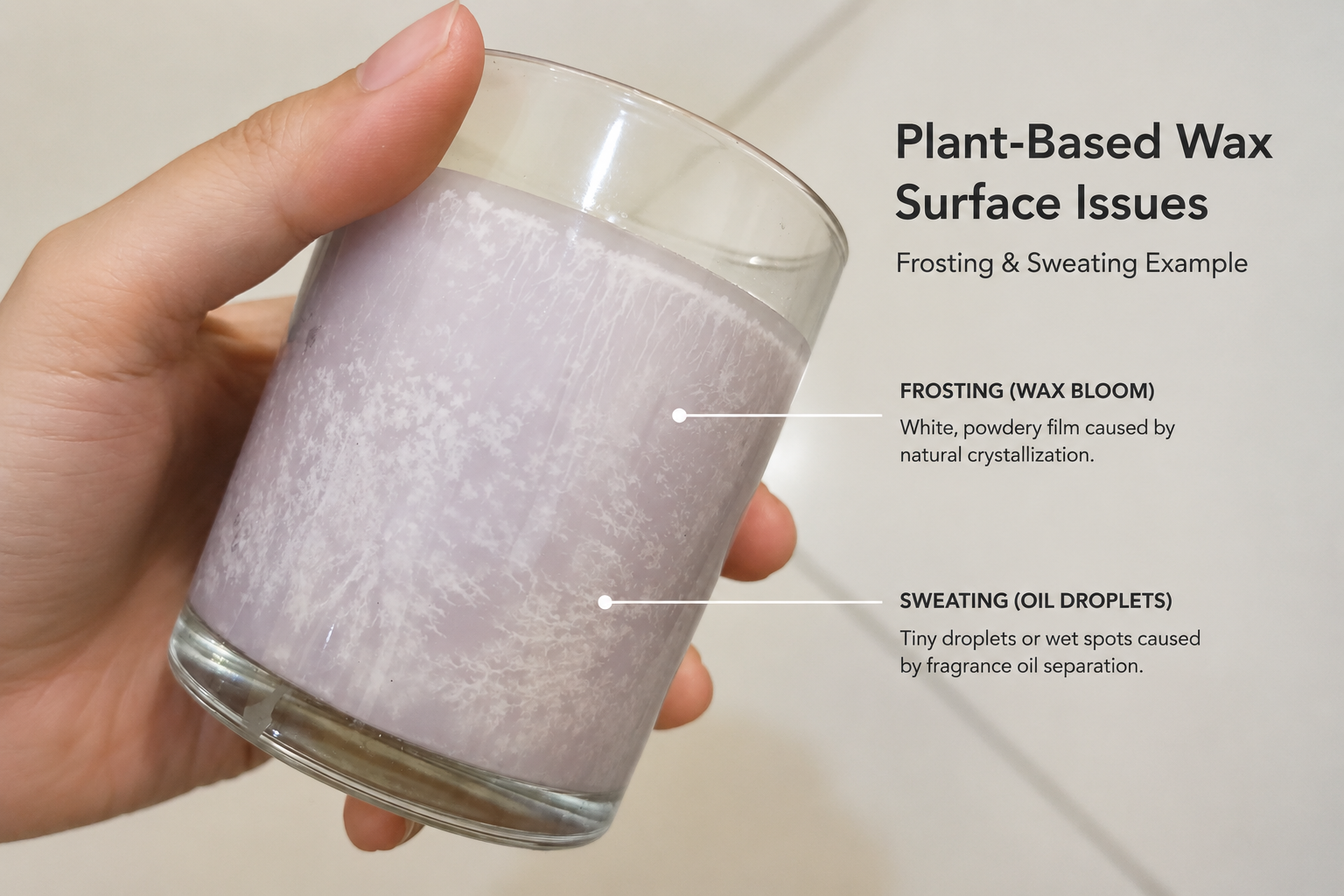
Frosting is the white, powdery film that appears on the surface of soy or other plant-based candles. It is caused by the natural crystallization of vegetable-based waxes.4 It is not a defect in the raw material. It is a predictable behavior that has to be managed through formulation and process design.
Sweating is the small droplets of oil that form on the surface. This happens when fragrance oil separates from the wax matrix during or after cooling.5 It is caused by fragrance overload, incompatible fragrance chemistry, or poor blending conditions.
Uneven gloss is the result of inconsistent cooling. When different areas of the candle cool at different speeds, the surface texture becomes uneven. This is a process problem, not a raw material problem.
| Surface Issue | Primary Cause | Secondary Cause | Solution Area |
|---|---|---|---|
| Frosting | Wax crystallization | Temperature fluctuation | Formulation + cooling control |
| Sweating | Fragrance separation | Overload or incompatibility | Fragrance ratio + blending |
| Uneven Gloss | Inconsistent cooling | Mold conductivity variation | Process control + mold selection |
Why These Problems Are Predictable
I treat every surface issue as a predictable output of a specific input. When the inputs are controlled, the surface becomes controllable. This is the core principle behind every formulation I develop. The surface is not a random result. It is the direct product of every decision made upstream.
How Do You Actually Eliminate Frosting and Sweating?
Frosting and sweating are not random events. They follow specific patterns. Once you understand the pattern, you can interrupt it. I have built a development process specifically around this.
The answer is not to add paraffin. The answer is to engineer the wax system so that crystallization and oil separation do not occur at the surface in the first place.
Controlling Crystallization Through Formulation
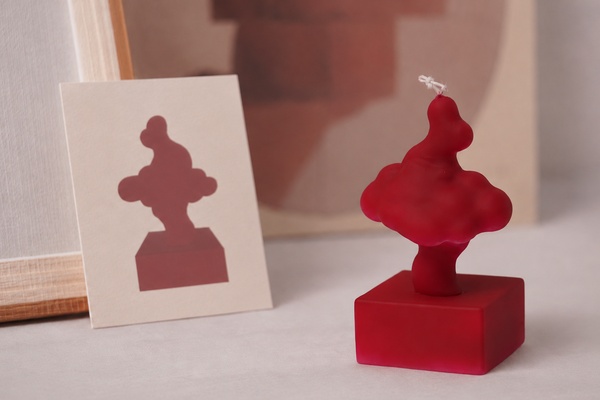
The wax blend is the first lever I use. No single plant-based wax performs perfectly on its own.6 I combine waxes to balance hardness, melt point, and crystal structure. For example, adding a proportion of coconut wax to a soy wax base softens the crystal structure and reduces frosting. But too much coconut wax increases the risk of oil migration. The ratio has to be found through structured testing, not guesswork.
Managing Fragrance Compatibility
Fragrance chemistry is the second lever. Not all fragrance oils are compatible with all wax systems.7 Some fragrance molecules separate from the wax matrix on cooling. I evaluate every fragrance for its polarity, viscosity, and load capacity before committing to a formulation. A fragrance that works perfectly in one wax base can cause sweating in another.
| Variable | What I Control | Target Range |
|---|---|---|
| Fragrance load | % by weight relative to wax | 6–10% depending on wax blend |
| Blending temperature | °C at the point of fragrance addition | 65–75°C |
| Pouring temperature | °C at the point of pour | 55–65°C |
| Cooling rate | Ambient temperature during set | 18–22°C ambient |
The Role of Botanical Additives
In some formulations, I use approved plant-based additives to stabilize the surface. These are not paraffin derivatives. They are botanical hardeners or crystal modifiers that improve surface uniformity without introducing any petroleum-derived materials. Their use is always disclosed in the material documentation I provide to the brand.
What Does a Production Workflow Look Like When Gloss Is a Specification?
Most candle production workflows are built around output volume. Mine is built around output quality. Gloss is not a preference in my process. It is a measurable, agreed-upon specification.8
When gloss is treated as a specification, the entire workflow changes. Every variable is documented. Every step is tracked against a defined standard.

Defining Gloss as a Measurable Output
Before production begins, I work with the brand to define what the surface should look like. That agreed visual standard becomes the acceptance criterion for every batch. This eliminates subjective interpretation at the quality control stage. It also makes results reproducible. A surface that passes inspection in the first batch should look identical in a batch produced three months later.
The Key Process Control Points
| Production Stage | Control Variable | Why It Matters |
|---|---|---|
| Wax melting | Temperature precision ±1°C | Prevents overheating and wax degradation |
| Fragrance blending | Blending temperature and mix duration | Ensures full fragrance integration before crystallization begins |
| Pouring | Pour temperature and pour speed | Controls the initial surface formation |
| Cooling | Ambient temperature stability | Determines the crystal growth rate at the surface |
| Demolding | Timing relative to full set | Prevents surface distortion or stress marks |
Why Documentation Matters
Every batch I produce has a full production record. This record captures every variable for that pour. If a surface defect appears, I can trace it back to a specific deviation in the process. This traceability is what separates engineered production from trial-and-error production. It is also the foundation of a development partnership that gives a brand real confidence going into scale.
Does Mold Choice Really Have That Much Impact on Surface Finish?
I have seen the same wax formulation produce very different surfaces depending on the mold used. Mold selection is not a secondary decision. It directly determines the quality of the surface the customer sees and touches.
The mold is the last thing the wax contacts before it becomes a finished product. The quality of that contact determines the quality of the surface.
How Mold Material Affects Surface Quality
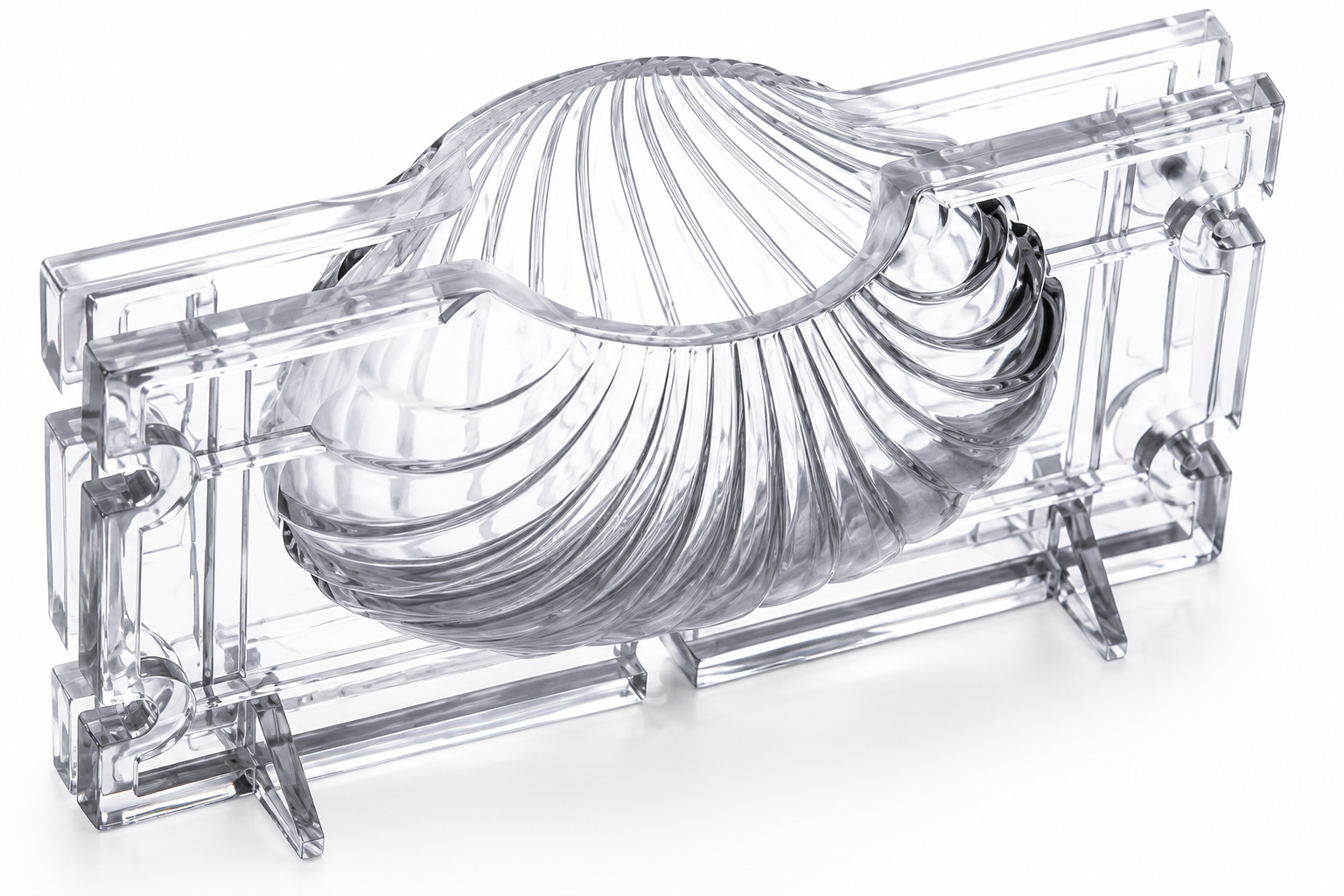
Different mold materials conduct heat at different rates.9 This changes the way the wax cools against the mold wall. Faster cooling can lock in a smooth, high-gloss surface before crystallization becomes visible.10 Slower cooling allows more time for surface crystal development.
| Mold Material | Heat Conductivity | Surface Result | Best For |
|---|---|---|---|
| Polished aluminum | High | Smooth, high-gloss | Premium vessel and pillar candles |
| Stainless steel | Medium-high | Smooth, consistent | Container and pillar formats |
| Silicone | Low | Matte or textured | Sculptural and organic forms |
| Polycarbonate | Medium | Good gloss, less durable | Short-run prototyping |
Surface Polish and Mold Precision
The internal finish of the mold matters as much as the material it is made from. A mold with micro-scratches, oxidation, or surface contamination transfers those imperfections directly to the wax surface. I work only with precision-machined molds that maintain a consistent internal polish across their full production life. Mold condition is checked before every production run.
Mold Release and Surface Chemistry
The mold release agent also affects the final surface. Some release agents leave a residue that dulls the gloss or creates uneven patches. I use minimal-residue formulations, and in many cases, I design the mold geometry so that release agents are not needed at all. This keeps the surface clean, uncontaminated, and visually consistent from unit to unit.
Can Surface Consistency Actually Support a Higher Price Point?
I have watched brands struggle to justify their pricing. Often the product formula is strong and the packaging is well-designed. But the surface looks unreliable from unit to unit. That visual inconsistency quietly undermines everything the brand is trying to communicate.
Surface consistency is not just an aesthetic quality. It is a commercial signal. It tells the customer that the product is controlled, intentional, and worth the price on the label.

What the Customer Actually Sees First
Before a customer reads a label, smells the fragrance, or reads the brand story, they see the surface. A smooth, consistent gloss surface communicates manufacturing precision. An uneven, frosted, or sweating surface communicates the opposite—regardless of how strong the brand story is.
This is not a subjective preference. Research in consumer behavior consistently shows that surface quality is one of the primary drivers of perceived value in premium product categories.11 The surface is the first point of proof.
| Brand Benefit | How Surface Control Delivers It |
|---|---|
| Premium positioning | Consistent gloss signals precision and care |
| Repeat purchase | Visual consistency builds product trust over time |
| Higher retail price | Surface quality gives customers a reason to pay more |
| Retailer acceptance | Consistent finish meets the QC standards of premium retail channels |
Turning Gloss Into a Product Specification
The shift I encourage every brand to make is to treat surface finish as a product specification—not a production hope. When gloss is specified before production begins, it can be tested, approved, and held to a standard across every batch. This is the difference between a brand that hopes its candles will look right and a brand that knows they will. Surface consistency, at scale, becomes a brand asset. It is something a customer can recognize and return to.
Conclusion
Premium gloss in a plant-based wax system is achievable. It requires precise formulation, controlled production, and the right molds. When managed properly, surface finish becomes a repeatable specification—one that directly supports premium positioning and pricing.
"Wax - Wikipedia", https://en.wikipedia.org/wiki/Wax. A petroleum or chemistry reference can support that paraffin wax is obtained from petroleum refining and consists primarily of saturated hydrocarbons. Evidence role: definition; source type: encyclopedia. Supports: Paraffin wax is a refined petroleum-derived wax.. ↩
"Paraffin wax", https://en.wikipedia.org/wiki/Paraffin_wax. A materials or chemistry source can support that fully refined paraffin wax is composed mainly of relatively straight-chain saturated hydrocarbons, giving it a more regular molecular composition than many natural wax blends. Evidence role: mechanism; source type: paper. Supports: Paraffin’s molecular composition is comparatively uniform and contributes to predictable physical behavior.. Scope note: This supports the general chemical regularity of refined paraffin, not a direct measurement of gloss in the article’s specific candle formulations. ↩
"A Comprehensive Review of Plant-Based Cosmetic Oils (Virgin ...", https://pmc.ncbi.nlm.nih.gov/articles/PMC11541506/. A lipid chemistry or agricultural processing source can support that these vegetable waxes are hydrogenated or modified plant oils composed largely of triglycerides. Evidence role: definition; source type: education. Supports: Common plant-based candle waxes such as soy, coconut, and rapeseed are based on triglyceride plant oils.. Scope note: The exact triglyceride profile varies by crop source, refining method, and commercial wax grade. ↩
"lipid-based wax compositions substantially free of fat ... - Patentscope", https://patentscope.wipo.int/search/en/WO2012071306. A wax or lipid crystallization source can support that vegetable waxes and fats form crystalline networks during cooling and storage, and that changes in crystal morphology can produce visible surface bloom. Evidence role: mechanism; source type: paper. Supports: Frosting in vegetable wax candles is linked to crystallization behavior in plant-derived waxes.. Scope note: This gives a materials-science mechanism for frosting but may not prove the exact cause in every commercial candle batch. ↩
"Candle Sweating: Causes And Solutions Explained (2025)", https://www.nicandlesupplies.com/blogs/how-to-guides/candle-sweating-what-it-is-why-it-happens-and-how-to-fix-it?srsltid=AfmBOoq0-0hIsEQyNEzkEU0w-pwv9mghV2rwOxhjEMVcPi-6Et8NeI9w. A formulation science source can support that phase separation can occur when an oil or fragrance is insufficiently soluble or compatible with a wax matrix, especially during cooling and crystallization. Evidence role: mechanism; source type: paper. Supports: Candle sweating can occur when fragrance oil separates from the wax matrix during or after cooling.. Scope note: The source may address phase separation in wax-oil systems generally rather than candle fragrance oils specifically. ↩
""Crystallization Behavior of Waxes" by Sarbojeet Jana", https://digitalcommons.usu.edu/etd/5088/. A review or technical source on vegetable waxes can support that natural waxes differ in melting behavior, hardness, crystallization, and oil-binding capacity, so blends are often used to tune performance properties. Evidence role: general_support; source type: paper. Supports: Plant-based waxes have varied physical properties, making blending a common way to balance candle performance.. Scope note: This supports the rationale for blending but does not prove that every plant-based wax is inadequate for every candle application. ↩
"Gel Safe Fragrance Oils - Lone Star Candle Supply", https://lonestarcandlesupply.com/gel-safe-fragrance-oils/?srsltid=AfmBOorMGpYvuCjofdfnt60chRjMzd9bHe2jpPGDTKJlIJgeLCJ1RfGa. A formulation or solubility reference can support that fragrance ingredients differ in polarity, molecular structure, and volatility, which affects miscibility and stability in wax matrices. Evidence role: mechanism; source type: paper. Supports: Fragrance compatibility depends on the chemistry of both the fragrance oil and the wax system.. Scope note: The source will likely support the compatibility principle rather than list compatibility for every commercial fragrance-wax pairing. ↩
"[PDF] Specular Gloss - National Institute of Standards and Technology", https://tsapps.nist.gov/publication/get_pdf.cfm?pub_id=841838. An international standards source can support that specular gloss can be measured instrumentally using standardized geometries and reported as a reproducible surface property. Evidence role: definition; source type: institution. Supports: Gloss can be treated as a measurable surface specification rather than only a subjective preference.. Scope note: The standard explains gloss measurement methods but does not define the author’s internal acceptance criteria. ↩
"[PDF] Untitled", https://www.energy.gov/documents/engineering-toolbox-2015-soil-and-rock-bulking-or-swell-factors. An engineering materials source can support that aluminum, stainless steel, silicone, and polycarbonate have substantially different thermal conductivities, affecting heat transfer during cooling. Evidence role: mechanism; source type: education. Supports: Mold materials differ in thermal conductivity and therefore influence cooling behavior.. Scope note: Thermal conductivity data support the heat-transfer premise, not the full candle surface outcome without process-specific testing. ↩
"Impact of cooling rate and shear flow on crystallization and ...", https://experts.illinois.edu/en/publications/impact-of-cooling-rate-and-shear-flow-on-crystallization-and-mech/. A polymer, wax, or crystallization source can support that cooling rate affects crystal size and morphology, which in turn influences optical appearance and surface smoothness. Evidence role: mechanism; source type: paper. Supports: Cooling rate can influence wax crystal morphology and visible surface gloss.. Scope note: The citation would support the crystallization principle; candle-specific gloss outcomes still depend on formulation and mold conditions. ↩
"Effects of Design Aesthetics on the Perceived Value of a Product", https://pmc.ncbi.nlm.nih.gov/articles/PMC8359925/. Consumer-behavior research on product appearance, packaging cues, and tactile or visual surface properties can support that surface finish influences perceived quality and value judgments. Evidence role: expert_consensus; source type: paper. Supports: Surface quality can influence perceived value in premium consumer products.. Scope note: Such research usually addresses product appearance and packaging broadly, so it provides contextual support rather than direct proof for candles specifically. ↩